
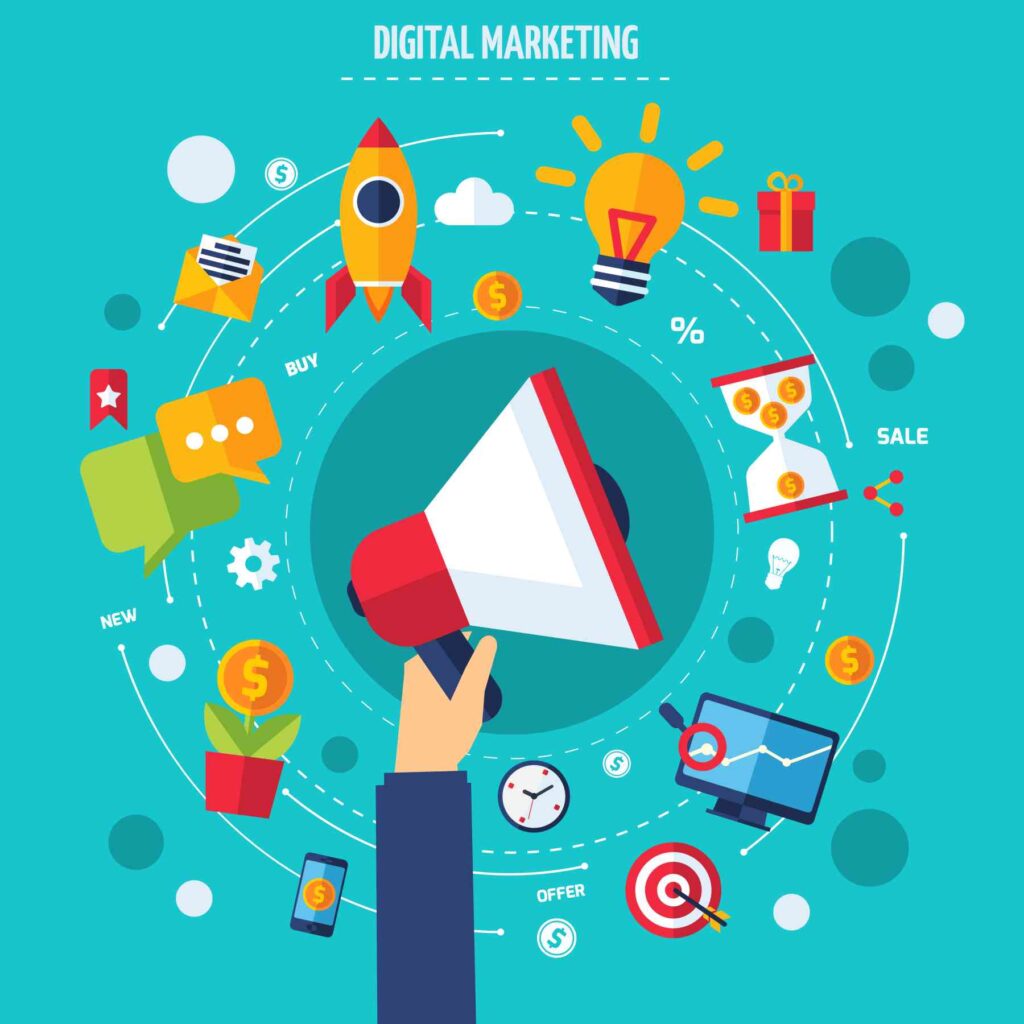
In e-commerce, digital marketing is now essential to the expansion of an online business. To stand out in the face of growing competition and shifting consumer behavior, brands need to implement astute, data-driven, and customer-focused strategies.
In order to help you improve traffic, conversions, and long-term brand loyalty, we’ll look at practical advice, e-commerce digital marketing tactics, and actionable insights in this blog.
What is digital marketing in e-commerce?
In e-commerce, digital marketing is the process of advertising and selling goods online through digital platforms like:
-
Engines of search
-
Social media platforms
-
Email marketing
-
Paid advertising
-
Content marketing
Digital marketing assists you in drawing in new clients and turning them into actual customers if you operate a store on platforms such as Shopify, WooCommerce, or Amazon.
Why digital marketing is important for e-commerce
1. Enhanced online Presence
Search engine optimization (SEO) ensures your products appear when users search for relevant keywords like “best running shoes online” or “affordable skincare products.”
2. Targeted Customer Reach
With paid advertising and social media targeting, you can reach specific audiences based on interests, location, age, and buying behavior.
3. Greater Rates of Conversion
Retargeting advertisements, email automation, and optimized product pages all aid in converting site visitors into buyers.
4. Cost-effective Promotion
Digital marketing offers more quantifiable outcomes and a higher return on investment than traditional advertising. Digital marketing offers more quantifiable outcomes and a higher return on investment than traditional advertising.
Top digital marketing strategies for e-commerce success
1. Search Engine Optimization (SEO)
SEO is one of the most powerful digital marketing strategies for online stores.
Key SEO Techniques:
Keyword research for product and category pages
Optimized product descriptions
High-quality blog content
Internal linking strategy
Fast-loading website
Use tools like Google Search Console and SEMrush to track rankings and performance.
Pro Tip: Focus on long-tail keywords like “organic cotton baby clothes online” instead of just “baby clothes.”
2. Content Marketing
Content increases search rankings and fosters trust.
Ideas for Effective Content:
Purchase guides
Articles comparing products
How-to guides
Stories of customer success
FAQs
For instance, if you sell exercise gear, create blog entries such as For instance, if you sell exercise gear, create blog entries such as:
“Top Home Exercise Equipment for Novices””Top Home Exercise Equipment for Novices”
“How to Pick the Best Treadmill for Compact Areas” “How to Pick the Best Treadmill for Compact Areas”
Potential clients are nurtured, and organic traffic is drawn in by content marketing. Potential clients are nurtured, and organic traffic is drawn in by content marketing.
3. Social Media Marketing for Online Stores
Social media sites are a major factor in e-commerce sales growth.
The following are well-known platforms:
Facebook.
TikTok
Social Media Strategies:
Influencer collaborations
Short-form video marketing
Shoppable posts
Giveaways and contests
User-generated content
Visual platforms work especially well for fashion, beauty, home decor, and lifestyle brands.
4. Email Marketing Automation
Email marketing remains one of the highest ROI channels in digital marketing.
- Essential E-Commerce Emails:
Welcome emails - Abandoned cart emails
- Product recommendation emails
- Discount and promotional campaigns
- Re-engagement emails
Automation tools allow you to personalize content based on customer behavior, improving open rates and sales.
5. Pay-Per-Click (PPC) Advertising
Paid advertising delivers instant traffic and measurable results.
Popular PPC Channels:
Google Ads
Meta Ads
Marketplace ads on Amazon
Retargeting campaigns are particularly effective for recovering lost sales.
Conversion Rate Optimization (CRO) for E-Commerce
Driving traffic is only half the battle. Converting visitors into customers is the real goal.
Improve Conversions By:
Adding customer reviews
Using high-quality product images
Simplifying checkout process
Offering multiple payment options
Providing clear return policies
A small improvement in conversion rate can significantly increase revenue.
The Role of Analytics in E-Commerce Marketing
Data-driven decisions are key to long-term growth.
Track important metrics such as:
Website traffic
Bounce rate
Conversion rate
Average order value (AOV)
Customer lifetime value (CLV)
Use analytics tools to identify what’s working and optimize your marketing strategy accordingly.
Future Trends in Digital Marketing for E-Commerce
The digital landscape continues to evolve. Here are upcoming trends:
AI-powered personalization
Voice search optimization
Video commerce
Influencer-driven brands
Mobile-first shopping experience
Staying updated with trends ensures your e-commerce store remains competitive.